
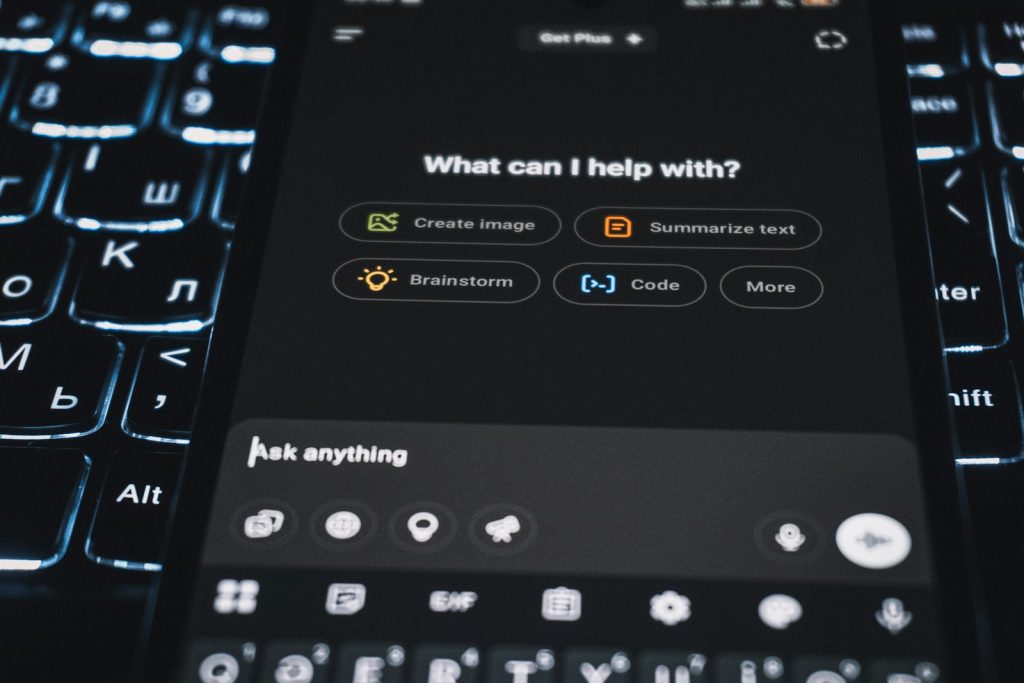
Organisations across industries are adopting artificial intelligence (AI) at breakneck speed. McKinsey’ Global AI Survey in November 2025 revealed that 88 percent report regular AI use in at least one business function, compared with 78 percent in 2024.
Forbes reported that 72% of businesses have adopted AI for at least one business function. Nearly three out of four businesses have started using AI.
The growing adoption of AI is helping businesses to:
Reduce waste by automating repetitive tasks
Gain agility by making decisions at greater speed
Create entirely new revenue streams
How Can Artificial Intelligence Improve Efficiency and Reduce Costs?
Often, it’s the small inconveniences that add up over time. Hours spent buffering on the phone with customer service, tiring data entry chores, scheduling meetings… AI can handle many of these repetitive tasks automatically, freeing-up your team to focus on what they do best. Software bots can automate manual tasks, optimise workflows, and help businesses:
Make fewer errors (and save on costly rework)
Reduce turnaround times (and delight your customers)
Empower leaner teams to do more
Take the example of a logistics business implementing AI to automate freight documentation. They might process shipments several times faster without laying a single person off.
Why? Because labour is often a business’s largest expense. Small efficiencies can equate to big savings over the course of a year.
Using AI, businesses can process real-time data faster than ever before – and thanks to AI’s predictive capabilities, they can do so with greater accuracy too. By identifying patterns in your data, AI can help you make better forecasts.
Imagine being able to predict demand before it happens. Or dynamically adjusting prices based on seasonality, stock levels, or competitor prices. Businesses that operate in volatile industries can gain a huge advantage by predicting the future rather than simply reacting to it.
Take customer experience: customers have come to expect nothing less than delightful experiences from the brands they do business with. Wanting to feel heard, important, and valued, today’s consumers are rewarding businesses that provide great experiences.
Personalisation is one of the best ways to make your customers feel special, and AI makes personalisation cheaper and more scalable than ever.
Here are a few examples:
Recommendation engines can suggest products/content to your customers based on their behaviour, boosting average order value.
Targeted marketing ensures the right customer receives the right message at the time they’re most likely to buy.
AI chatbots can improve CX by instantly responding to customer enquiries. And never getting a query wrong.
Customer sentiment can even be tracked to flag at-risk churners before they cancel, automatically triggering retention offers.
Boost Revenue With New Products and Services
Not only can AI improve your existing business, but AI tools can be used to create new products and services.
Businesses have started capitalising on AI by introducing premium services and features only made possible by AI. From embedding intelligent features into SaaS products to helping enterprises reduce churn – AI is helping companies do things that wouldn’t have been possible even two years ago.
Improved customer retention = happier customers buying more from you = more revenue.
Businesses Who Adopt AI Will Win
You don’t have to look very far to see businesses who are reaping the rewards of AI.
Early adopters of new technology gain a significant competitive advantage over the businesses that refuse to keep up. A manufacturer implementing AI to anticipate maintenance will suddenly be able to run their operation at a lower capacity. Previously, they would have had to maintain surplus capacity and stock just in case something broke down.
A financial services firm using machine learning to assess risk when lending to customers could review loans faster and with fewer errors.
Operating at lower cost = lower prices or better margins. Happy customers = brand loyalty. Better margins and brand loyalty = a bigger market share.
What About The Downside Of AI?
Of course, let’s address the elephant in the room.
AI is no magic bullet. And yes, there are reasons you may be hesitant to jump on the bandwagon:
The cost and effort of implementation. Concerns over employee displacement. Data privacy/integration.
The list goes on…
…But consider this:
Implementation costs are decreasing every year software bots become easier to create and maintain. Studies have repeatedly shown that AI will create new jobs, not replace them. And although data can be tricky, there are plenty of AI solutions that are compliant-by-design. Plus, you can implement AI bots gradually, reducing the risk to your bottom line.
Real-World Examples of AI Implementation
Retail: Amazon’s AI Recommendation engine is responsible for 35% of the online retailer’s revenues.
Finance: JP Morgan Chase use an AI program called COIN to review commercial loan documents. Something that would have taken 360,000 lawyer hours per year.
Manufacturing: Siemens uses AI-enabled quality control that can identify defects better than human inspectors.
TLDR;
Efficiency leads to increased insight. Increased insight helps you make better business decisions. Better business decisions lead to new products, services, and opportunities.
The benefits of AI are multiplicative. Once you start winning on one front, others will follow. Your competitors can do the same. That’s why the time to invest in AI is now. Before your competitors gain an insurmountable advantage.
Is it time your business made use of AI-powered tools?